
Financing the Energy Transition: From Fossil Fuel Incentives to Clean Energy Investment
Overview
Ministers and leaders from over 20 countries and international institutions met in Belém for the 11th Energy Transition Council Ministerial on 15 November 2025 at COP30. The Ministerial was co-chaired by the COP30 Brazilian Presidency; Michel Heijdra, the Netherlands’ Climate Minister; and Katie White, the United Kingdom’s Minister for Climate.
It was organised by the Energy Transition Council (ETC), the Clean Energy Transition Partnership (CETP) and the Coalition on Phasing Out Fossil Fuel Incentives Including Subsidies (COFFIS). The Ministerial built on outcomes from COP28 and COP29, aiming to address three strategic priorities:
- Accelerating the transition from fossil fuels to clean energy through the reform of public finance flows, including inefficient fossil fuel subsidies
- Advancing country-led planning and implementation of transition pathways
- Showcasing solutions and success stories that turn fiscal and policy reforms into tangible clean energy investment.
A decisive political signal
The key message from the high-level participants, including ministers from across the Global North and South, senior representatives of multilateral development banks (MDBs), philanthropic and technical institutions and think-tanks, was clear: continuing to direct scarce public finance towards fossil fuels is incompatible with a credible global energy transition.
Participants agreed that the world cannot deliver the Paris Agreement if vast public funds are channelled into fossil fuel energy. They therefore called for a decisive pivot away from fossil fuel incentives, along with policy reforms to enable investment flows towards a clean, affordable and secure global energy system. Subsidy reforms and realignment of international public finance are not optional but a prerequisite for fiscal stability, investment certainty and meaningful climate action.
Equally, participants emphasised that reforms must be designed with people affected, not imposed on them, thus ensuring that vulnerable households are protected and the transition strengthens rather than weakens social cohesion. The International Energy Agency (IEA) also highlighted the importance of phasing out fossil fuel subsidies in a way that addresses energy poverty and ensures a just transition, stressing the need for transparency, international dialogue and cooperation to overcome global barriers to reform.
Ministers emphasised that achieving the goals of the Paris Agreement and the Global Stocktake requires both fiscal reform and scaled investment in clean energy, particularly in emerging markets and developing economies (EMDEs). They recognised that the persistence of fossil fuel incentives and subsidies remains one of the key barriers to equitable energy transitions. In the context of constrained public finances and the large gap in delivery for mitigation finance in EMDEs, using public finances to subsidise and de-risk the fossil fuel sector further limits the fiscal space for the clean energy transition in EMDEs, and distorts the price signals that should make renewables the more attractive investment.
Regions and countries building momentum
Countries from Latin America, Africa and Asia called for stronger political leadership on subsidy reform and international public finance – applauding the results that have already been seen from member countries of the ETC, CETP and COFFIS. Ministers and representatives from other partner organisations attending highlighted that renewables are now the cheapest power source in most countries. Maintaining fossil incentives distorts markets, entrenches inequality and delays growth.
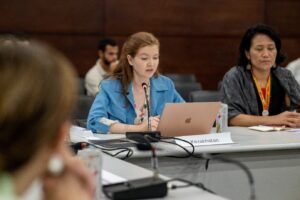

Participants from Latin America, Africa and Asia shared national experiences on measures to accelerate the energy transition and underscored the need for sustained international technical and financial support to manage short-term economic impacts while safeguarding public confidence, alongside the need for increased domestic resource mobilisation. Multiple countries – including Costa Rica, Nigeria and the Philippines – showcased reforms already unlocking substantial clean energy investment.
Latin American partners reiterated that the region should aim for a high share of 80% renewables by 2030 and 100% in the long term, arguing that ending and reforming fossil fuel subsidies is central to ensuring a just energy transition, boosting competitiveness, modernising economies and reducing environmental harm.
International financial institutions are crucial
Ministers and country representatives highlighted practical pathways for reform, including targeted social protection and fiscal restructuring, alongside innovative fiscal tools such as carbon pricing, taxation and green energy auctions. They also stressed that development banks and donors must now match political courage in EMDEs with equally bold financial support.
MDBs, including the European Bank for Reconstruction and Development (EBRD), International Finance Corporation (IFC), International Monetary Fund (IMF) along with the International Renewable Energy Agency (IRENA), reaffirmed their commitment to increase support for countries undertaking difficult reforms. Their priorities include scaling and offering more de-risking tools, blended finance and country platforms to lower the cost of and increase access to capital in EMDEs to deliver Paris-aligned pathways.
Priority actions following on from COP30
The Ministerial delivered a strong political signal on the need to realign global finance and policy away from fossil fuel incentives and towards clean energy investment.
Three clear priorities emerged:
- Align finance and policy by accelerating the realignment of international public finance with the Paris Agreement and fossil fuel subsidy reform, and by strengthening country-led planning linked to updated NDCs. This will create the conditions for mobilising clean energy investment on the scale required by the Global Stocktake.
- Put people at the centre by ensuring reforms expand energy access, empower workers and communities, and deliver tangible benefits that build trust and leave no one behind.
- Scale through collaboration by supporting governments, MDBs, private finance and technical partners to turn disparate efforts into system-wide progress, especially for expanding grid networks and storage solutions and for deploying large-scale renewables.
The Ministerial co-chairs reaffirmed the ETC’s, CETP’s and COFFIS’s commitment to develop partnerships and coordinate financial and technical support to accelerate the transition from fossil to clean energy. They welcomed the continued close collaboration between these alliances to strengthen North–South cooperation.
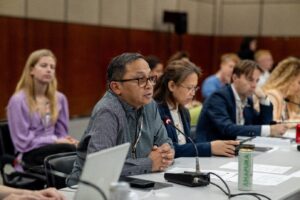

The political momentum generated at this COP by the coalition of countries calling for a clear, just and equitable roadmap to move away from fossil fuels provides an opportunity to draw on the know-how, technical capacity and convening power of these alliances in advancing structured, time-bound guidance for the global energy transition.
Katie White, UK Minister for Climate, said:
“We must work together to develop tailored regional and national approaches. Clean energy is not something we can impose. If we were to just go in and tell partner countries how to manage their transitions, then we’d be repeating so many of the mistakes of the past.
We must work together to ensure that transition plans address and acknowledge local challenges, as well as opportunities, and that the process of change is just, inclusive and sustainable.”
Michel Heijdra, Vice Minister for Climate and Green Growth, the Netherlands, said:
“Phasing out fossil fuel subsidies must be integral to transition strategies. While the reasons for removing subsidies are well known, real barriers are political and systemic: concerns from exporting countries, weak state capacity to support vulnerable groups without subsidies and competitiveness constraints.”
The Energy Transition Council will work in partnership with the Clean Energy Transition Partnership and the Coalition on Phasing Out Fossil Fuel Incentives Including Subsidies, while building a closer partnership with the Global Clean Power Alliance (GCPA) Finance Mission, the UK- and Brazil-led initiative launched at COP29, to support the delivery of the technical and financial support countries need to move decisively to accelerate their clean energy transitions.